


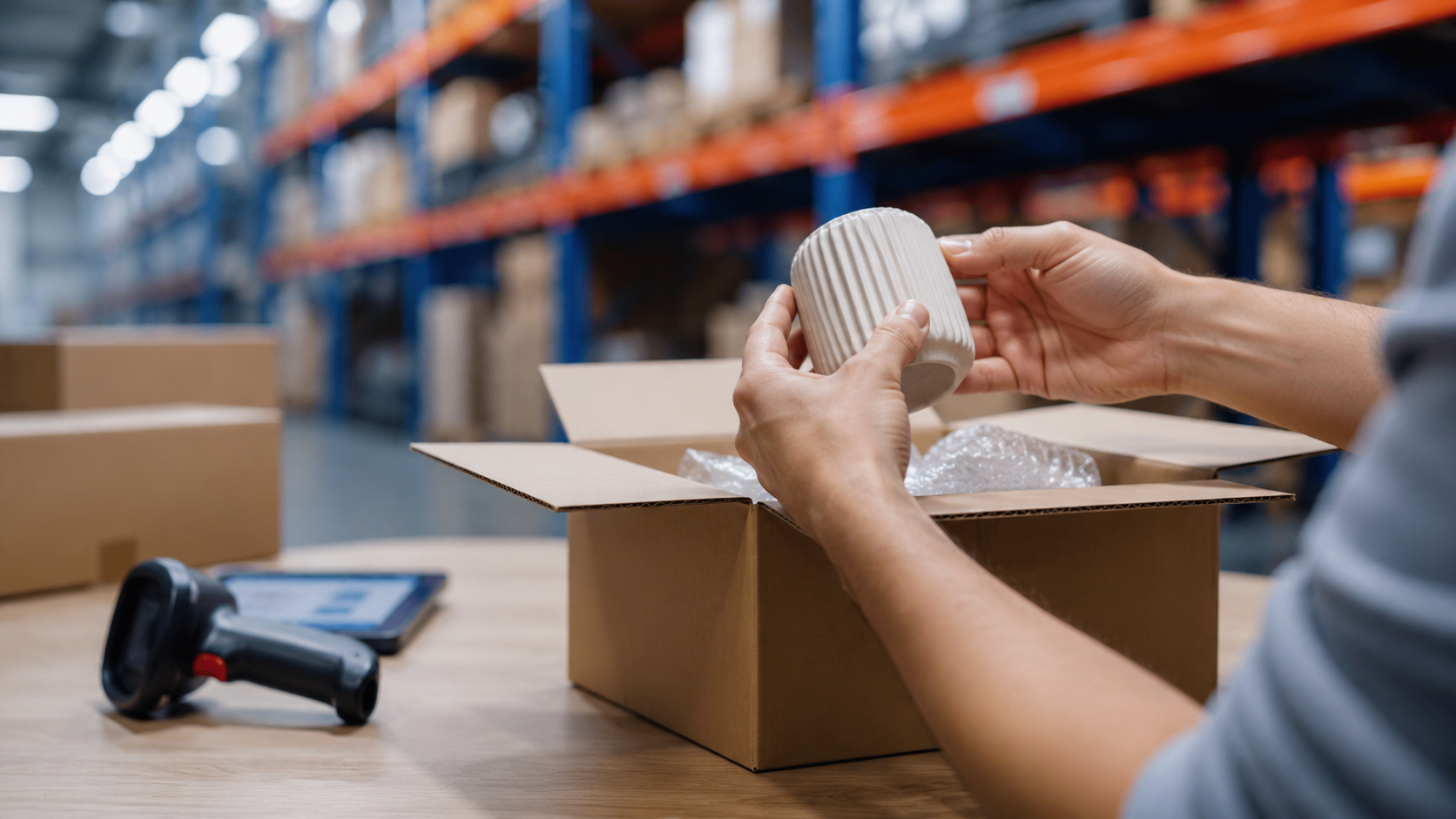
Returns Management in E-Commerce: How to Turn Returns Into an Operational Advantage
Returns are not a problem to hide: they are a structural variable of e-commerce. In some sectors, such as clothing, they can exceed 30% of orders. The question is not whether they will arrive, but how well you are organized to manage them.
At LDE, we treat e-commerce returns management as an integral part of the fulfillment service, not as a residual activity to manage when it happens. This fits into the broader scale of our services for e-commerce logistics. In this article, we explain why this is a choice that makes a difference, and how our operational process works.
Why reverse Logistics is strategic
(and often underestimated)
Reverse Logistics, or return Logistics, is the set of operations concerning the flow of goods returning to the warehouse: from the end consumer back to the warehouse. It is the least visible side of e-commerce, but one of the most critical for profitability.
A poorly managed return has cascading effects: the product remains stuck in an undefined state, warehouse availability does not update, the refund to the customer is delayed. The result is operating costs that increase, customer experience that worsens, and stock that loses value.
Conversely, an efficient warehouse return management process reduces refund times, recovers saleable products, and keeps inventory always up-to-date and reliable.
How our returns management process works
Every return that enters our warehouses follows a defined process, with clear phases and complete traceability.
Goods are received and identified. Each shipment is matched to the original order through the WMS system, so that the return is immediately reconciled with the original transaction.
Then comes inspection of returned goods. Products are checked visually and, where requested by the customer, also functionally. Based on the condition found, they are classified according to agreed categories: intact product to be returned to stock, product with minor defects to be sent to alternative channels, non-recoverable product to be disposed of.
Classification is carried out according to the customer's specific instructions, upon their request. There is no standard process that is the same for everyone: each agreement defines the acceptance criteria, tolerance thresholds, and product destinations.
E-commerce stock reintegration happens in real time. As soon as a product is classified as resaleable, its availability returns to the system, ready for a new order. This is the point where well-managed returns management stops being a cost and becomes a value recovery.
E-commerce returns outsourcing: when it makes sense to outsource them to a third-party operator
In-house returns management works as long as volumes are contained. When the return rate grows, seasonal peaks add to returns from the previous season and the process risks slowing down the entire operational flow.
Outsourcing e-commerce returns management to an operator already structured for fulfillment has a specific advantage: the two operations, outbound shipment and return, share the same infrastructure, the same WMS system, the same personnel. There is no discontinuity between forward and reverse flow.
For customers who already entrust us with fulfillment, returns management is a natural extension of the service. For those who manage fulfillment internally but want to outsource only returns, we evaluate the feasibility of a dedicated agreement on a case-by-case basis.
Sectors where returns management
weighs most
The sectors with the highest return rates are those where product choice is more subjective or depends on physical experience. In the fashion sector, the case is well known: wrong size, color different from the photo, fit not satisfactory. But consumer goods, hi-tech, and cosmetics also generate significant returns, often due to packaging defects or expectations not aligned with the online description.
For each sector, the process of inspecting returned goods requires different skills. In our warehouses, verification takes place according to the specifications agreed with the customer, without a generic approach that risks misclassifying merchandise and losing recoverable value.
Looking for a partner to manage your
e-commerce returns? Let's talk.
An efficient e-commerce reverse Logistics process doesn't just happen, but neither is it complicated to build with the right partner. Before making any proposal, we want to understand your current return rate, the product sectors involved, and how you are currently managing the flow.
Fill out our contact form: we'll get back to you shortly with a tailored assessment, with no strings attached.
Interested in a quote or a partnership?
Send us a request: we'll get back to you
in no time!
Interested in a quote or a partnership?
Send us a request: we'll get back to you
in no time!
Interested in a quote or a partnership?
Send us a request: we'll get back to you
in no time!
Interested in a quote or a partnership? Send us a request: we'll get back to you in no time!


